Fast 24 Hour Air Conditioning and Heat Pump Service

Top Quality Workmanship, BBB A+ Rated, AZ ROC Complaint Free

Tag: Air Conditioning

Leaky Heat Pumps Expensive To Operate and Unhealthy Too
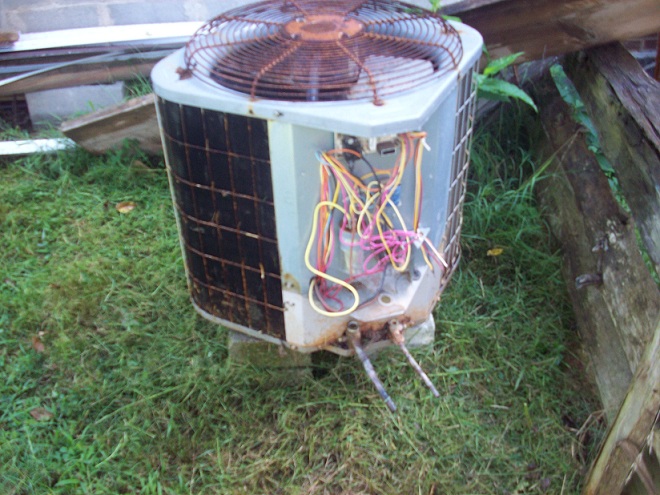
Leaky Heat Pumps - Old CarrierLeaky Heat Pumps Waste Refrigerant

Although leaky heat pumps may waste refrigerant, they do not consume refrigerant. If your home or business Phoenix air conditioning system requires frequent refrigerant “top-offs,” the unit is not using refrigerant; it is leaking refrigerant. For you this means increased operating costs, less HP efficiency and possible contamination the eco-system.

Any HVAC unit that requires frequent refrigerant charges should be checked for cause and effect. You need to understand that merely adding refrigerant is not a variable solution to the leaky heat pump expensive operating faults. Quality Arizona Air Conditioning Repair never simply add AC refrigerant to a leaking heat pump. Testing the system is the only efficient solution to a heat pump or AC leak. This means isolating and repairing the leak before correcting the system’s refrigerant pressure.


Older Leaky Heat Pumps Use Unhealthy Chlorodifluoromethane Gases

Since the early 1990s, the U.S. has been in the process of phasing out chlorodifluoromethane (HCFC-22 or R-22 or Freon) refrigerants. Identified as a substance that depletes the planet’s ozone layer, Freon actively contributes to the dangers associated with global warming. Regulated under the 2010 Clean Air Act, Freon is banned from use in new heat pumps and other air conditioning equipment.

In order to prevent further atmosphere contamination, the U.S. Environmental Protection Agency (EPA) promotes recycling the gas from old air conditioning and leaky HP pump equipment. Beginning in 2020, R-22 will no longer be available for use in existing heat pumps and other air conditioning equipment. Diminishing supply is creating a continuously increase in the cost of R-22 gas. This makes your leaky HP expensive to operate as well as unhealthy to you and the rest of the world.


Leaky Heat Pumps Expensive To Operate

Old or new, any leaky air conditioning system is expensive to operate: 1) Because it requires additional service calls, 2) Because it functions less efficiently than a fully charged system and 3) Because it provides less household comfort. However, for older Freon-based air conditioning and heat pump units, make sure you call a Phoenix Heat Pump repair center that is EPA certified for R-22 issues. Typically identified as “Section 608 certification,” the EPA tech certification assures you that your Arizona heating and cooling repair center understands the laws, allowable uses and discharge specifications concerning R-22 refrigerant.

But remember, the cost of Freon is on the rise. Not all shops equally price the gas, so make sure you ask in advance what it will cost per pound to charge your system is leaky freon is an issue.

You might also want to consider replacing your worn Phoenix Heat Pump system. Modern HVAC equipment is remarkably more energy efficient that the older units. Along with the use of new less-expensive EPA-approved refrigerant gases, modern Heat Pumps also: 

  • Consume less electricity
  • Provide better whole-home comfort
  • Are designed for longer durability
  • Require fewer AC and Heat Pump service calls
  • Include extended product warranties and Air Conditioning installer guarantees.


Avoid the Waste, Expense and Health Issues

Don’t put up with the expensive waste of freon associated with leaky heat pumps. Arizona-based American Cooling and Heating provides Valley-wide residential and commercial air conditioning and heating repairs, services and installations. Our technical service team is on hand 24-hours per day, providing free estimates and repairs for all types of: 

  • Air handlers
  • Cooling equipment
  • Heat pumps,   
  • Furnaces
  • Refrigeration
  • And other HVAC Equipment.

Look for us throughout the Phoenix Arizona Metro region and all surrounding cities, towns and areas. For more info, click here.


Manufactured Weather – How Carrier Heat Pumps Function

Carrier Heat Pumps – A Revamping of Manufactured Weather

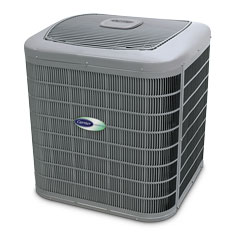
Carrier Heat Pump Condensing Unit

Just a little over 114 years ago, escaping from the torment of 100-plus degree Arizona temperatures was limited to finding shade, taking cold showers or standing near to an electric fan. William Carrier had not yet coined the term “manufactured weather,” and the concept of air conditioning was a dream not yet formulated as an attainable project. A/C units were nonexistent. The concept of a Carrier Heat Pump was even further from thought..

But in 1902, Willis Carrier created a product that changed the world’s concept of heating and cooling and the principles of environmental control. The Carrier “manufactured weather” machines resolved the challenges of how to regulate indoor environments via the power of modern air conditioning. The age of healthier interior air flow, improved personal comfort and a new method for overcoming summer heat waves  – even those scorching air-twisters that shimmer above Phoenix AZ – had finally arrived.    

Modern Carrier air conditioning systems and Carrier heat pumps enable industries worldwide with the tools that promote better employee productivity, health and workplace comforts. In the global-wide residential home front, Carrier heating and cooling products help homeowners find reprieve, comfort and relaxation regardless of the bruising associated with exterior climate changes.

But what is it that makes a Carrier Heat Pump superior to standard central air conditioning?

Manufactured Weather – Carrier Heat Pumps Address Both Sides of the Coin

Throughout Canada, Mexico and the United States, over 20,000 air conditioning service dealers carry and install Carrier HP equipment and other Carrier HVAC products. The Carrier Company Website lists 31 dealers in the general Phoenix area, including regions that take in Scottsdale, Cave Creek, Glendale and Peoria. Carrier HVAC products are designed to handle even the most extreme demands for “manufactured weather.”

So how do Carrier HP systems work?

The functions of a heat pump are no mystery. The heat pump merely regulates the process of how heat moves. For example: Place a cup of hot coffee on an outside table and leave it untouched for several hours. The heat escapes into the atmosphere and the coffee grows cold – even when the external atmosphere is already very hot. Therein lie the fundamentals of what it means to “move” heat.

A Carrier Heat Pump flips the process. Rather than permitting heat to escape into the external atmosphere, a HP draws heat energy from the outside and “moves” it into an enclosed area – the rooms in your home or office.

But what happens when the outside temperature rises above the desired internal temperature? Your Carrier HP equipment merely reverses the direction of “movement.” As a result, the heat within your home or office gets relocated to the outside atmosphere. The temperature within your home drops and you experience cool and comfort – regardless of the current 110-degree Phoenix heat wave.

The point to remember: Heat Pumps do not generate heat; they merely relocate heat. Thus the cost of operating a heat pump is much less expensive than the price of electrical energy, gas or any other type of fossil fuel. An installed Heat Pump system provides a cost-effective energy-efficient solution to your Phoenix area need for “manufactured weather.”

About American Cooling and Heating

American Cooling and Heating is an acknowledge Arizona professional Carrier Heat Pump Installation company. AC&H Carrier services include residential, commercial and industrial heating and cooling solutions. Licensed, bonded and insured, AC&H is a member of the:

  • Arizona Registrar of Contractors
  • ACCA Air Conditioning Contractors of America
  • NATE Certified Technicians
  • AND the Arizona Better Business Bureau.

AC&H A/C and Heat Pump installation, services and repairs extend to the following Arizona installed air conditioning product lines: 

  • Amana
  • Goodman
  • Rheem
  • Trane
  • Carrier
  • AND other major brands.

To learn more about the American Cooling and Heating line of Carrier Products, please review the following brochures:

How Do Split System Air Conditioning or Heat Pump Units Function?

The Components of a Split System

Split System air conditioning units use a compressor, condenser and evaporator to pump refrigerant fluid through a heat exchange process. However, unlike the layout of a conventional cooling unit, the components of a Split System are not self-contained in a single condensing unit.

Residential central air conditioning or heat pump systems typically feature a Split System design. The condenser and compressor usually makeup the outdoors component of the system. When installed correctly, the external unit is mounted in a shady area free of brush and unnecessary obstructions to air flow. Likewise, the evaporator, blower and ductwork function as components of inside sections of the unit.

The fined coils of the evaporator is typically mounted in the ductwork and downstream of the blower unit. The units are connected via two flexible refrigerant lines. In an energy-efficient design, each of the components is custom-selected to meet the exact physical requirements of each individual home. Refrigerant piping is also custom-fashioned make the best use of the equipment.

Fundamentals of Split System Operations

In any Split System heat pump or air conditioning layout, two fundamental processes are involved:

1) Some form of refrigerant fluid provides the principle cooling power

2) The primary components of the cooling unit, evaporator and condenser, are located in separate physical locations.

Two points mark the distinction between a Split System heat pump and a Split System air conditioner:

  1. Heat pumps are capable of reversing the condenser and evaporator functions
  2. Being dedicated to cooling only, central air conditioning systems typically provide a better cooling energy-efficiency ratio than heat pumps.

Evaporator: Typically considered the starting junction of the cooling cycle, the evaporator receives high-pressure refrigerant liquid through a thermostatic expansion valve. Due to pressure differences and heat drawn from the surrounding medium of air or water, the liquid within the evaporator boils. Thus the evaporator captures the heat from within the building and transfers it to the refrigerant gas as it leaves the evaporator.

Compressor: In simple words, air conditioning systems transfer indoor heat to the outdoors. Heat pumps can reverse this function. The compressor within the system draws refrigerant gas from the evaporator, performs a compression process on the gas and then releases the compressed gas directly into the condenser.

Evaporator: Typically considered the starting junction of the cooling cycle, the evaporator receives high-pressure refrigerant liquid through a thermostatic expansion valve. Due to pressure differences and heat drawn from the surrounding medium of air or water, the liquid within the evaporator boils. Thus the evaporator captures the heat from within the building and transfers it to the refrigerant gas as it leaves the evaporator.

Compressor: In simple words, air conditioning systems transfer indoor heat to the outdoors. Heat pumps can reverse this function. The compressor within the system draws refrigerant gas from the evaporator, performs a compression process on the gas and then releases the compressed gas directly into the condenser.

The Invisible Costs of Using Air Conditioning Systems

In times past, the Southwest has been known to use “swamp coolers” for general residential cooling purposes. The energy consumption of a swamp cooler – better known as an evaporative cooler – is typically two to four times less than a modern air conditioning system. Thus arise a serious question:

With 56 percent of the total home energy bill going toward heating and cooling, is the switch toward air conditioning worth the affect it has on climate, health and resources?

In a white paper produced by Arunima Chatterjee and Melanie Lenart, the process of energy versus water as a home cooling method is studied in detail. The researchers compare the costs for cooling a typical 2,000-square-foot home using both types of cooling systems. In application, they say that a swamp cooler can cool the home for as little as 250 kilowatt-hours per month, whereas an air conditioner will consume 850 kilowatt-hours per month when cooling the same Tucson Arizona home. This implies a monthly cost difference of better than $60.00 at current Arizona electric rates.

Water, a Natural Resource Not Fully Accounted In Expense

In a further report from the Environmental Research Laboratory at the University of Arizona, T. Lewis Thompson noted that a swamp cooler could use an average of 150 gallons of water in a single day. Arizona temperatures, extended heat waves and battles with run-away fires enhance the value of water. Since standard air conditioning systems do not make direct use of water, it would first appear that the swamp coolers are wasting valuable resources.

However, University of Arizona researchers have been quick to point out the indirect water consumption of a typical air conditioning system. In Arizona, hydropower consumes approximately 65 gallons of water for every kilowatt-hour of generated electricity. Likewise, coal-fired plants consume around half a gallon to produce one kilowatt-hour of electricity.

Effectiveness, The Primary Measuring Stick

Since swamp coolers make use of evaporative cooling, their effectiveness is hindered during monsoon season. The storms bring moist air, but the swamp coolers function best in a dry environment. Air conditioning is not limited by external weather conditions. Being thermostatically controlled, air conditioning systems provide Arizona homeowners with regulated temperature regardless of external or internal humidity.

Climate Changes

Some researchers claim that air conditioners generate more global warming than do swamp coolers. Yet the argument typically fails to include the greenhouse gases produced by coal-driven electrical sources.

Issues Pertaining to Personal Health

Researchers also claim that evaporative cooling provides a better quality of indoor air. Reasoning centers around the filtering system of a swamp cooler. In principle, the pads of a swamp cooler are always moist, thereby capable of trapping dust and pollen more effectively than conventional air conditioning systems. Additionally, the swamp coolers are praised for adding moisture to the inside air, thus preventing dry eyes, throats and skin.

However, air conditioners are credited as more efficient when dealing with re-circulated indoor air. The counter-arguments also suggest that conventional air conditioning systems magnify indoor air pollution, yet high-efficiency filters can easily remedy the situation.

Stay in the Swamp or Switch to Modern Air Conditioning

Most Arizona residents now use conventional air conditioning units. None of the above arguments take into account the benefits of calling an Arizona heat pump installation expert. The continual yearly rise in Arizona temperatures will force society to consider every option in energy conservation, resource preservation and personal health.

Right now, a heat pump provides a reasonable point of balance. By increasing the energy efficiency of home heating methods, heat pumps create an effective balance to a difficult situation.

State-of-the-Art Arizona A/C Service Center Addresses the Issue of Cost Effective Air Conditioning Upgrades and Replacements

In Response to the Current Arizona Heat Wave, Phoenix Arizona A/C Expert, American Cooling and Heating, Answers Your Questions About Air Conditioner Replacement Planning

Arizona and Other U.S. States Experience Record-Breaking Temperatures

According to the National Environmental Satellite, Data and Information Service (NESDIS), June of 2012 marked the 14th hottest June on record for the documented contiguous United States. For many areas, the first six months of 2012 broke major continual U.S. heat records. With a plus 4.4 degree Fahrenheit increase, Arizona joins the ranks of states most affected by the heat wave.

The following guide to system analysis from American Cooling and Heating may help you better clarify your home cooling situation. Is it time to upgrade or do you need to completely replace your old air conditioning equipment? Here is help with the decision.

High Temperatures, Principle Investments and the Importance of an Energy Efficient Air Conditioner

Air conditioners, though often viewed as luxury items, take on new priorities during record breaking heat waves. When the temperatures in Mesa AZ, Scottsdale AZ and other Phoenix areas peek the 100+ degree mark, a malfunctioning or broken A/C unit can actually leave homeowners in a life-threatening situation. If you need immediate air conditioning services, please remember that American Cooling and Heating technicians are on call 24 hours a day, seven days a week.

High temperatures bring about an adjusted mind-set. When the heat rises and the A/C sputters, even the most reluctant spender begins to consider an air conditioning upgrade or replacement.

Yet before leaping into a new purchase, homeowners must analyze their home cooling needs. A new air conditioning system amounts to a principle investment in household comfort, reliable performance and the future value of your home. However, when it comes to HVAC equipment, super-sizing is not the best approach.

American Cooling and Heating provides the following tips as an expansion on several select Energy Star recommendations from the U.S. Environmental Protection Agency:

Older Units – Some things grow better with age. Not so for your home air conditioner or heat pump. If your system is over 10 years old, purchasing a new cooling unit will save as much as 20 percent on your energy bill, provide better cooling comfort and enhance the value of your home. Before investing in any major repairs, consider the value of installing a complete new HVAC system.

Excessive Repair Bills – It’s like trying to keep an old, road-weary vehicle in operation. The cost of repairs can quickly exceed the price of monthly payments. If your home cooling equipment is troubled by frequent breakdowns, unsatisfactory performance or a host of other year-round “Surprise” problems, it may be time to upgrade key components or even replace the entire system.

Temperature Balance – Improperly balanced home cooling can be due to poor equipment installation, incorrectly sized ducts, inadequate home insulation or worn out system components. If you are constantly experiencing drastic hot-to-cold or cold-to-hot changes from room to room, you should have your HVAC unit checked for clogged air filters, leaky air ducts, undersized external units and worn out components. Circumstances will reveal the value of upgrade over repair or new over upgrade.

Standard Thermostat Controls – Home air conditioning is often wasted on an empty house, an imbalanced temperature control system or trigger-happy kids with ready access to the thermostat. Upgrading to a programmable thermostat can provide an energy efficient way to save money and better regulate your home cooling systems to meet your family living patterns.

Problems With Humidity – Inadequately sized air conditioning equipment, leaky ductwork or a worn out HVAC system can cause a summer buildup of excess humidity. It’s a comfort problem that can also create internal mold issues and health complications. If the system is undersized, replace it. If it is worn out, replace it. If it merely has leaks, air blockage or other basic problems, repair it.

Excessive System Noise – Aside from obvious physical damage that may need attention, an excessively noisy air conditioning unit can imply an undersized duct system or even a problem with your indoor coil component. Find the true cause and then make a reasonable decision based upon sound facts.

Credentials That Evidence Solid Service

American Cooling and Heating has serviced the Phoenix area for over 19 years. Fully licensed, bonded and insured, the company holds an A+ rating with the Arizona Better Business Bureau.

If you need a FREE estimate concerning the reliability of your current A/C system, visit one of the area’s premier HVAC companies:

American Cooling and Heating. Call 480-699-2516.

Valleywide Service • Fast Response 24/7
Call Now For A Free Estimate